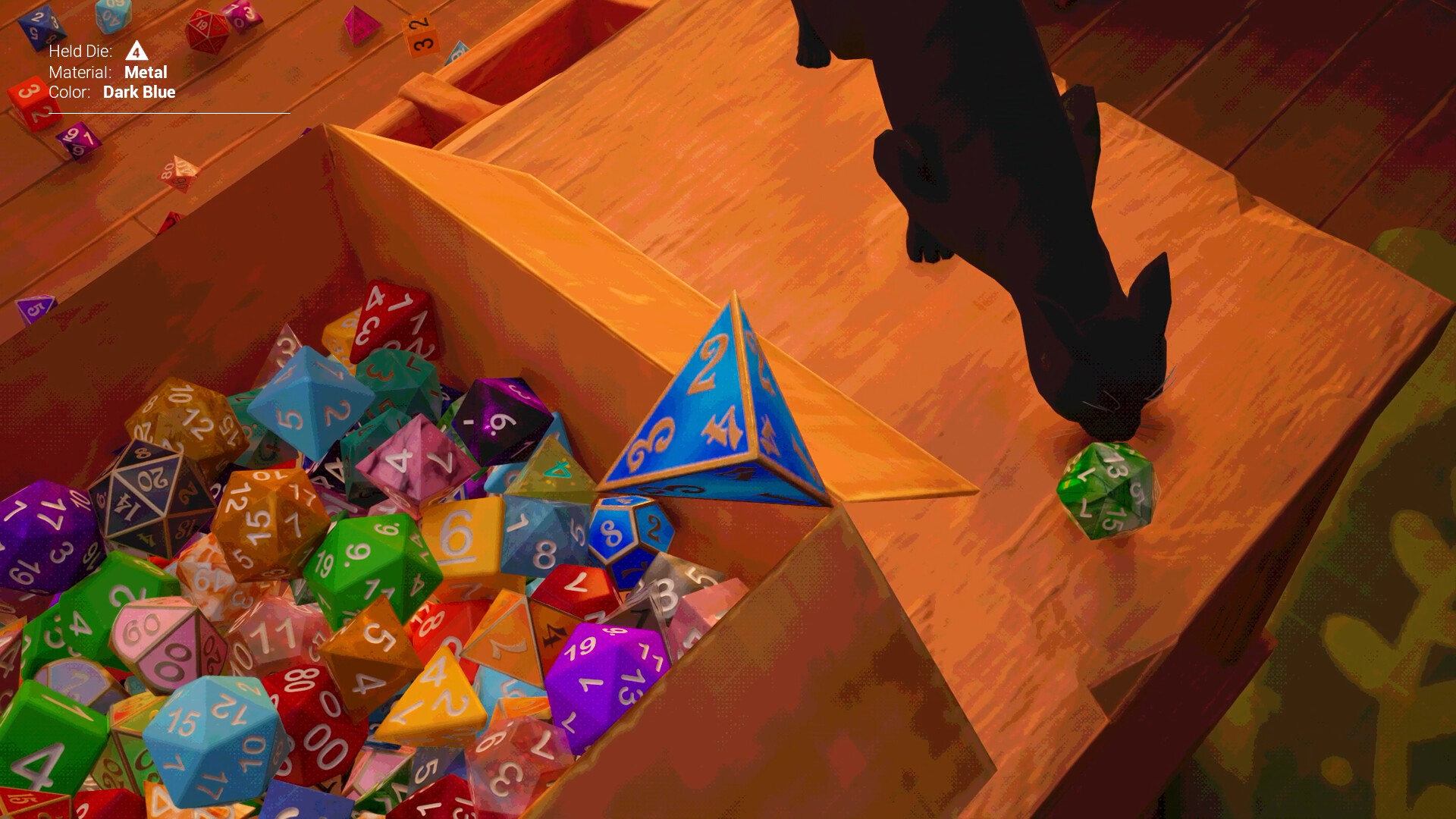
Every complete set in Dice Hoarder holds one of each classic polyhedral die. Here is how the faces relate, and how a set comes together on the shelf.
Read the faces below in the order you will meet them: pick up a loose die, check its colour, and pair it with six matching siblings. The percentile die and the D10 work as a pair — the two tens dice are stored together and should never be split. The D20 is the piece most players reach for first, but every face is needed before a set counts as complete.
This hub lists the seven faces plus the full-set entry itself, so you can jump straight from one die to its shelf-mates. Because the game is not yet released, face counts shown are the standard polyhedral values every RPG set shares — not values pulled from a specific in-game build.
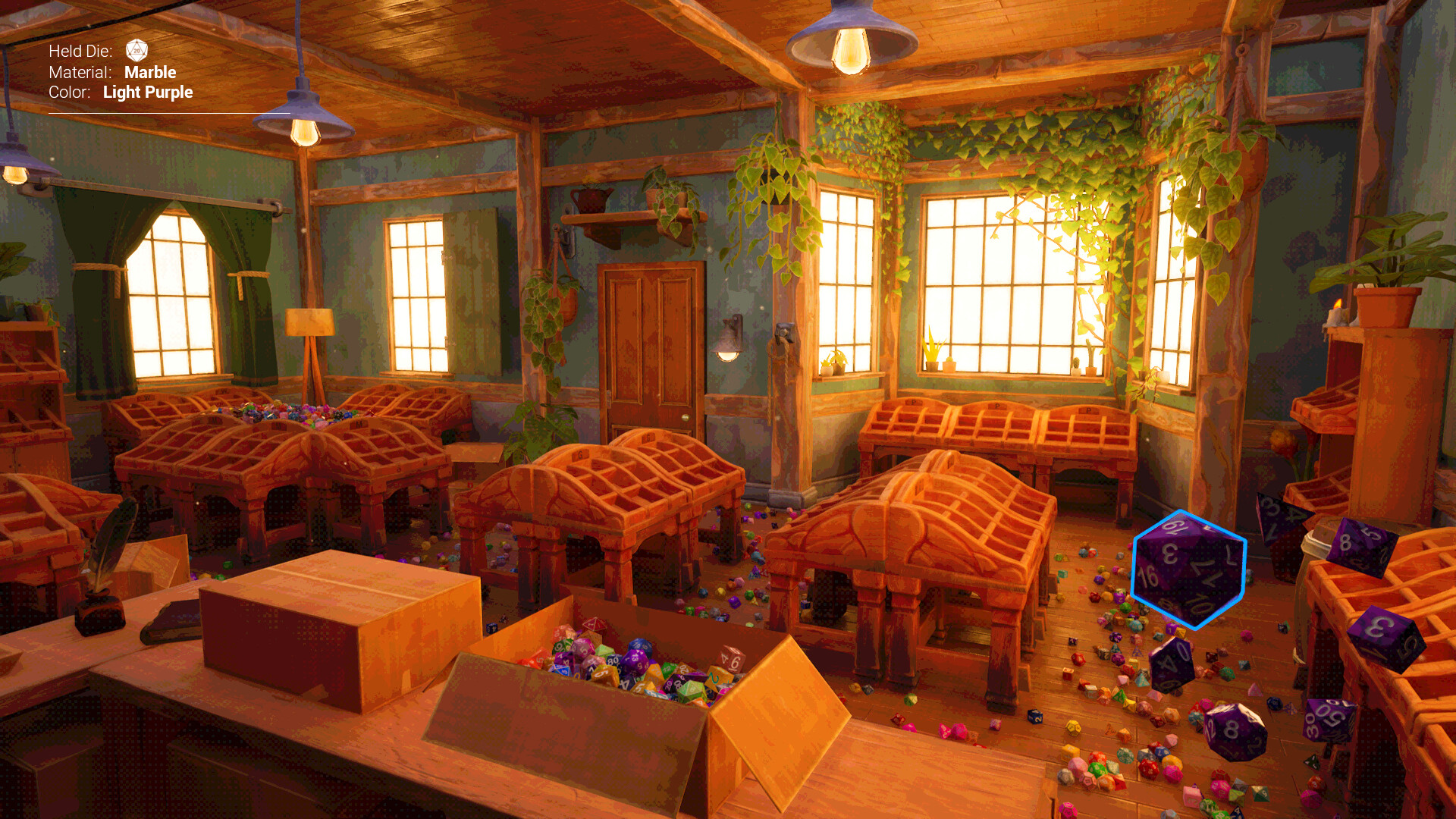
The Complete Seven-Piece Set
The building block of the whole shop. You rebuild 400+ of these seven-piece RPG sets: pick up each scatter, check its color and material, and bring one percentile plus a D4, a D6, a D8, a D10, a D12 and a D20 into a matching group, then stock it where it belongs. A D4 is four-sided, a D6 is six-sided, a D8 is eight-sided, a D10 is ten-sided, a D12 is twelve-sided and a D20 is twenty-sided.
Open crate →
The D4 (four-sided die)
The d4 sits at the fragile end of the set: four triangular faces meeting in points. In a seven-piece set it is usually the piece you handle the most but think about least — grab one whenever a set is missing its smallest number.
Open crate →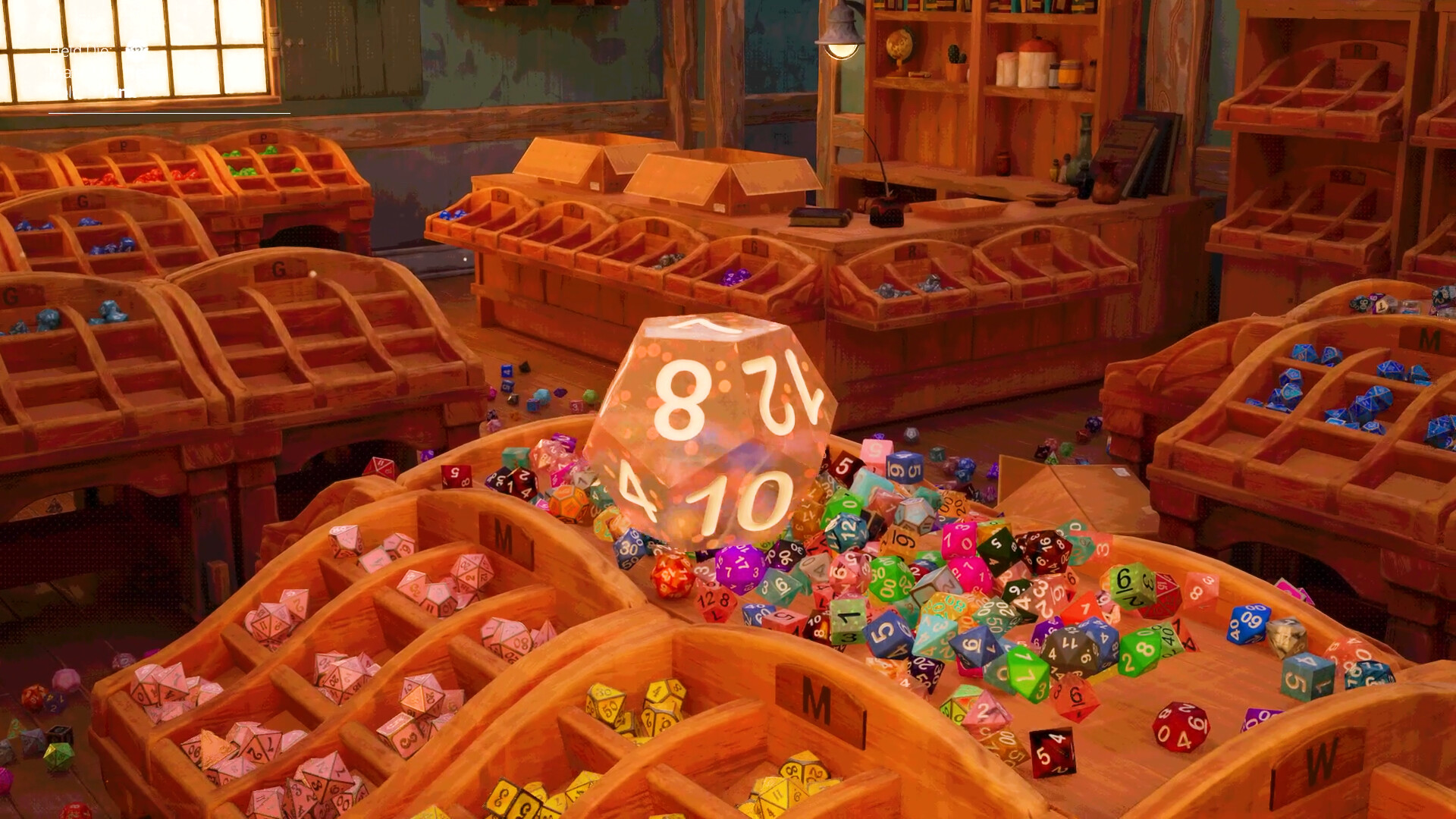
The D6 (six-sided die)
The d6 is the shape everyone already knows. In the shop it belongs in the middle of the shelf: easy to spot, easy to pair, and a steady presence in the sets you complete first.
Open crate →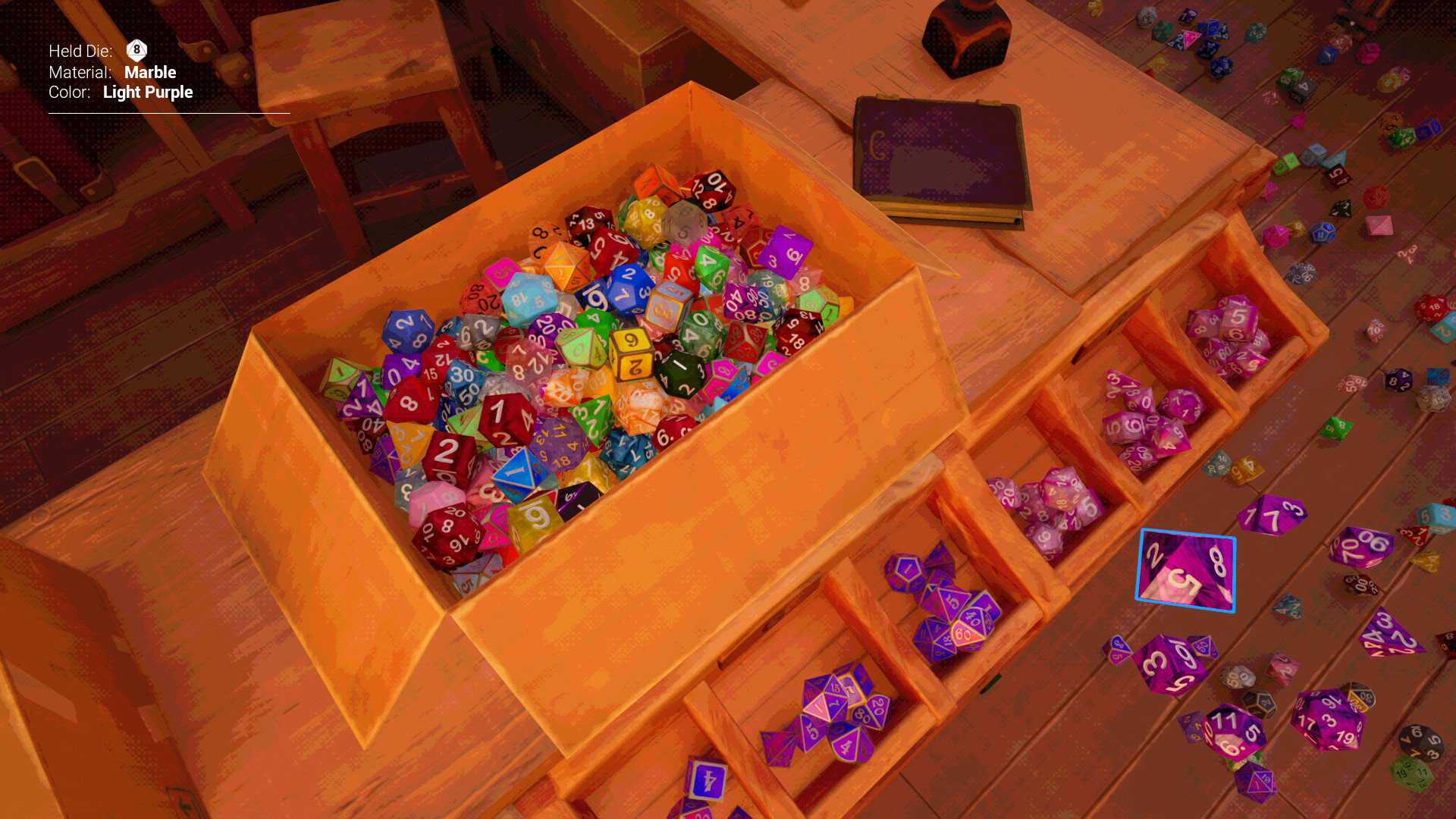
The D8 (eight-sided die)
The d8 reads as a sharp, angular shape among rounder cubes. It is a common color-matched pair with the d10, so checking both before you stock keeps a set contiguous.
Open crate →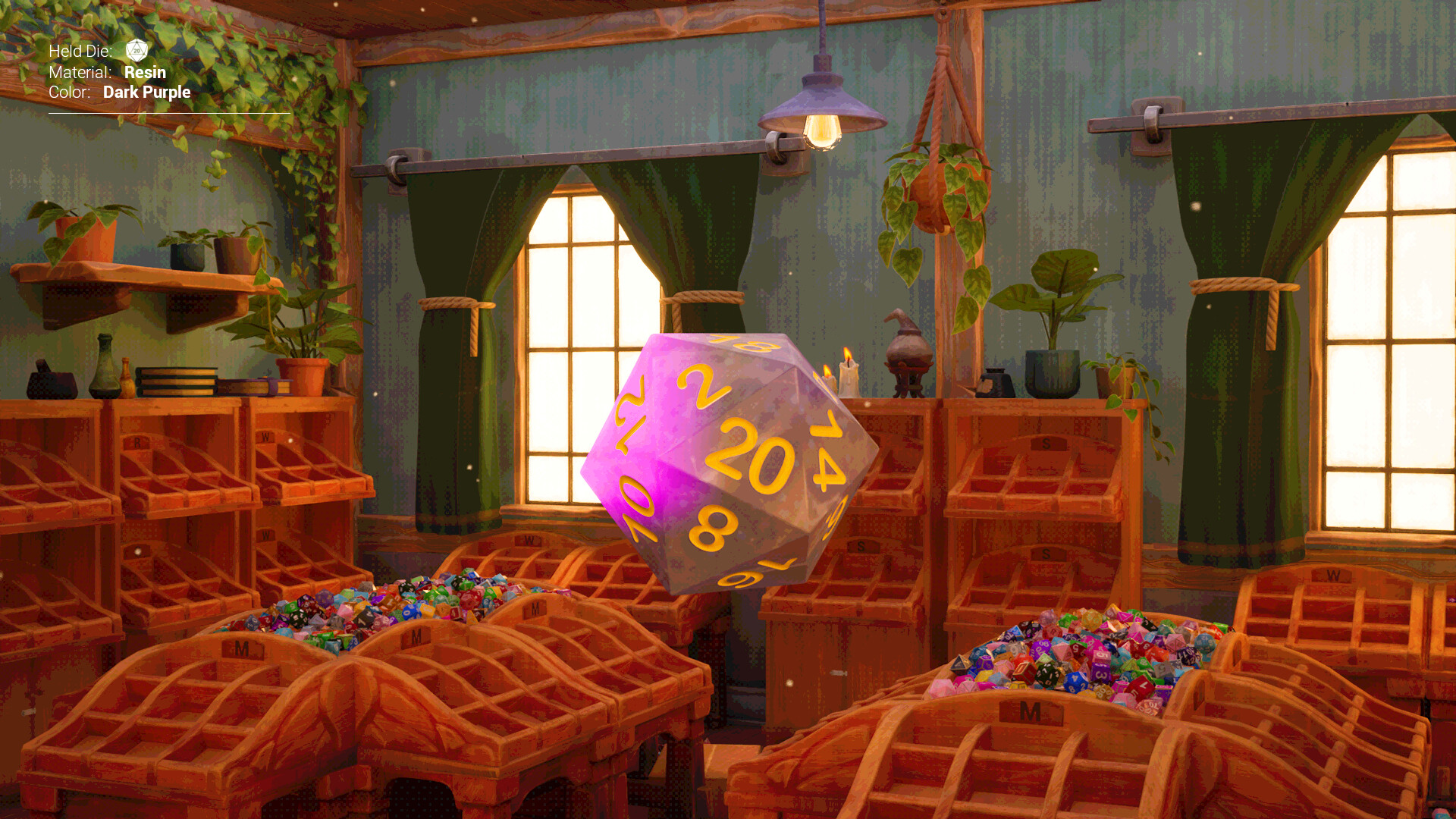
The D10 (ten-sided die)
A d10 carries digits zero through nine. Two d10s together make the percentile d%: one for tens, one for units. Keeping a matching pair together makes a set feel complete rather than patched.
Open crate →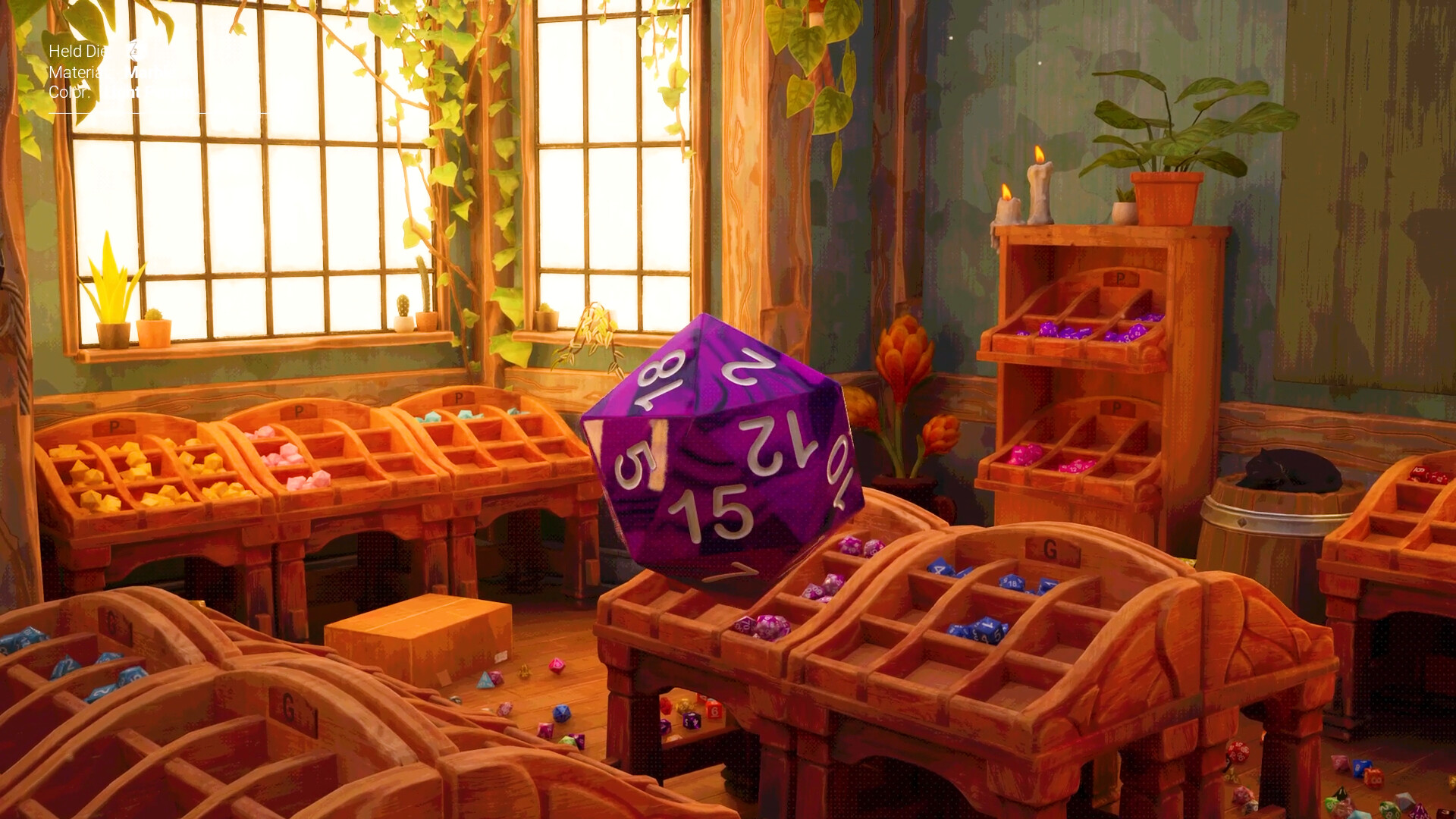
The D12 (twelve-sided die)
The d12 is the pentagonal dodecahedron, twelve pentagons around a round-ish silhouette. It is the face that reads as "complete set" at a glance on the shelf.
Open crate →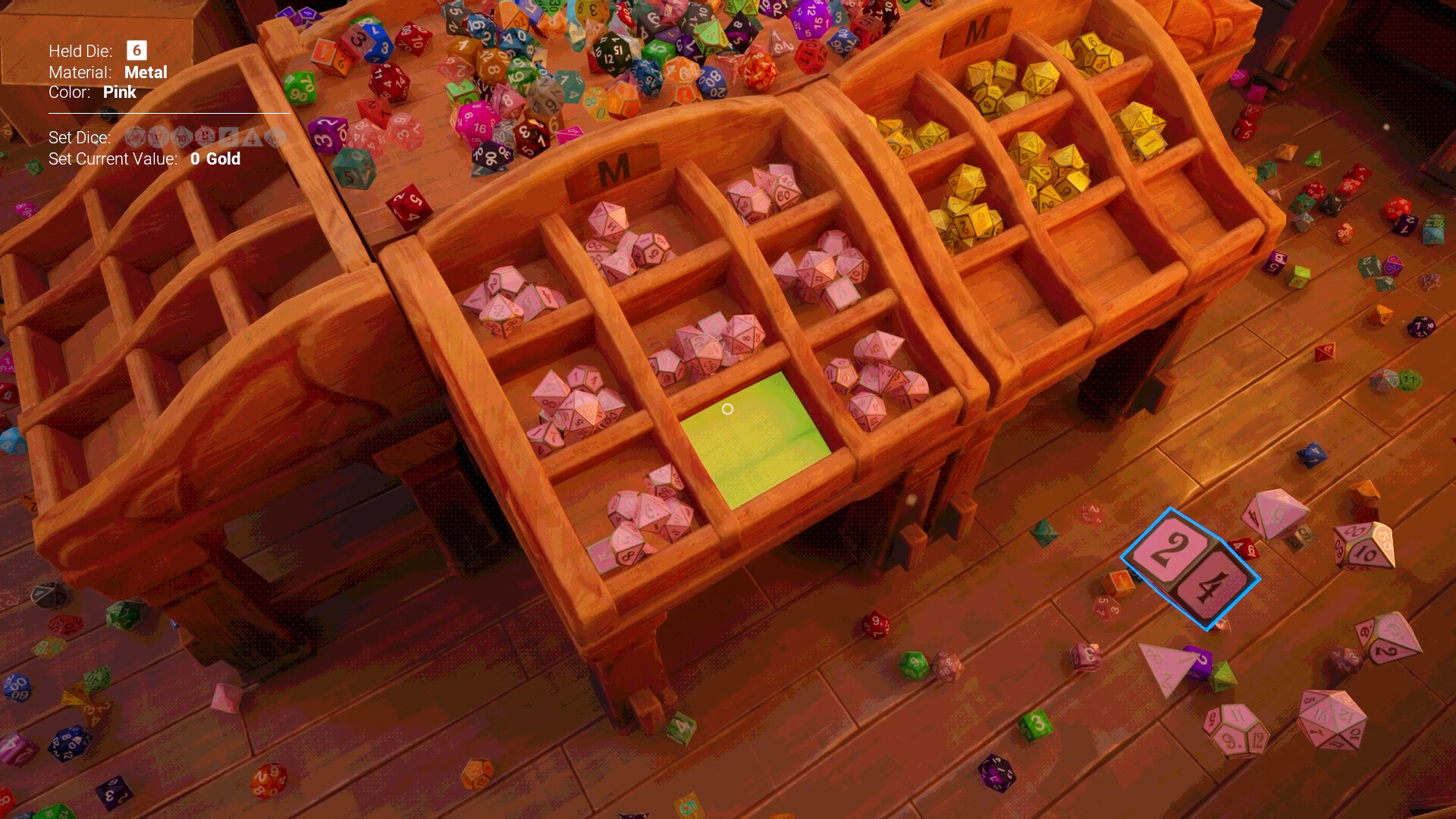
The D20 (twenty-sided die)
Every polyhedral set leans on its d20, the twenty-sided icosahedron that is the loudest, roundest, most-liked die in the tray. It is the piece to track first when a set is nearly complete.
Open crate →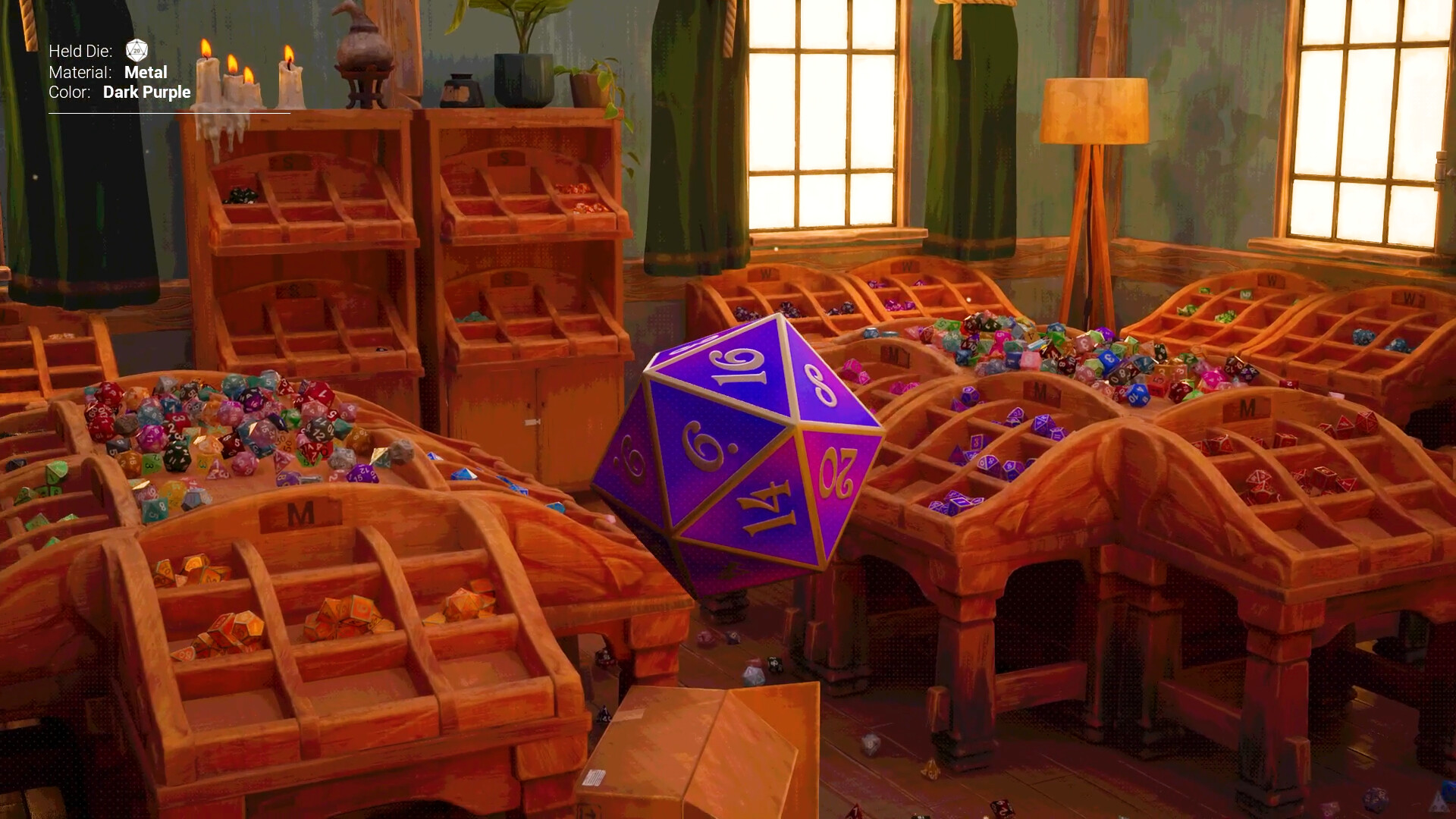
The Percentile Die (d%)
The percentile die is a ten-sided die numbered in tens, read alongside a units d10 to make a percentile roll. It is the tens die of the pair, kept with its matching units die so a set stays complete.
Open crate →