Launch day by the numbers: the achievement curve
A day after release, Steam’s global achievement data is a photograph of the first wave of players. It is the only public evidence of how far anyone actually gets.
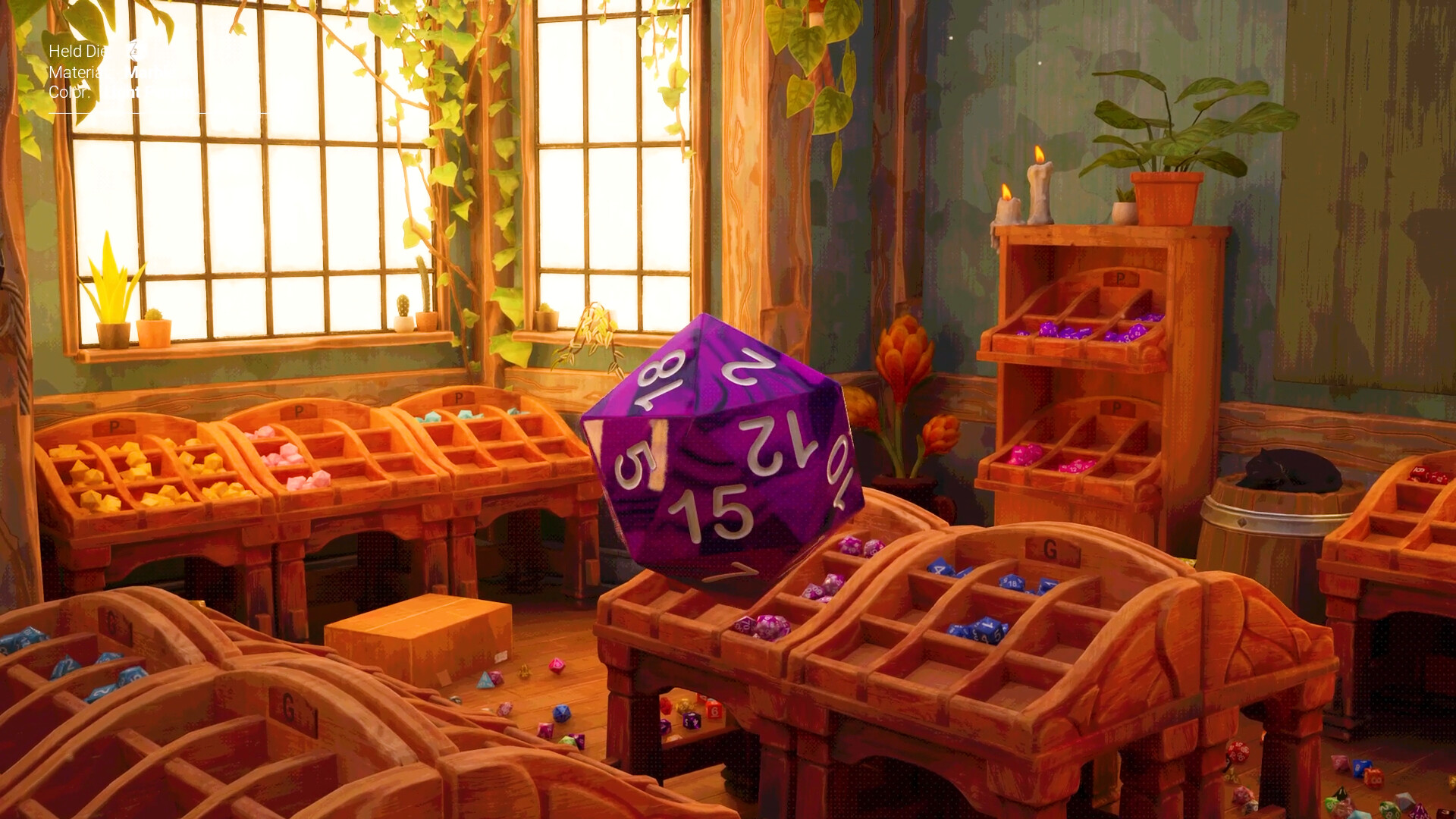
Dice Hoarder ships with sixteen achievements, which is a modest number for the genre and a very useful one for anyone trying to understand the game from outside it. Achievement names describe systems that the store page never mentions — crafting, displays, trays, hidden food — and the global unlock rates describe behaviour, not marketing. Read together, the list is the most complete official account of the shop that exists.
The floor is flat
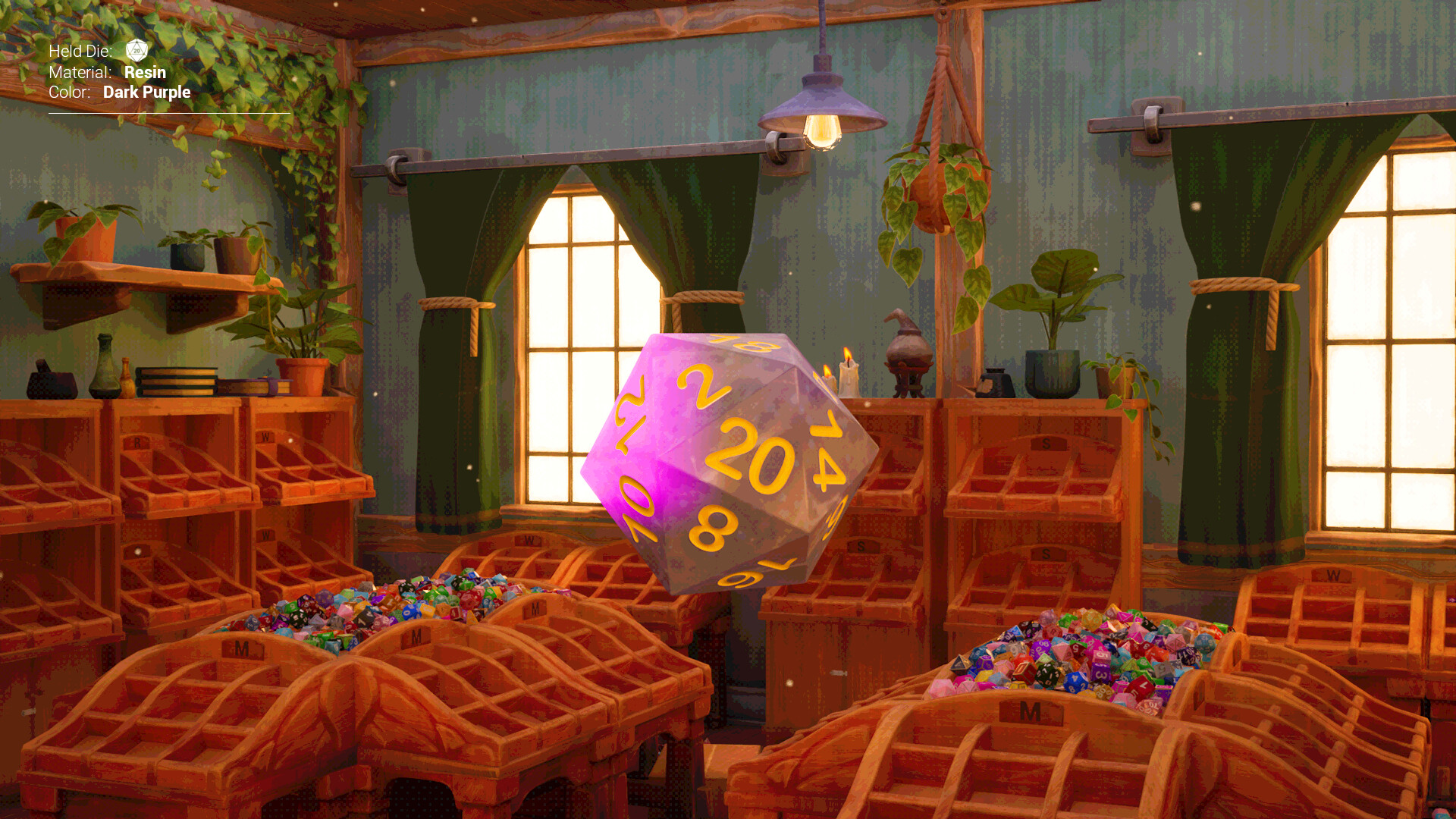
Five achievements sat at or near universal on launch day. Placing a first die, completing a first set, learning a first skill, petting the cat and rolling a natural 20 in a tray are all between roughly thirty percent and a hundred. Four of them are pinned at a hundred. In other words, within a day, essentially everyone who opened the game played the core loop, learned at least one power, found the cat, and about a third of them went looking for a rolling tray.
That flat floor is worth noticing because it describes an opening that gets out of its own way. There is no gate before the loop, no lengthy intro to sit through, and nothing that a player has to understand in advance. The first thing the shop asks you to do is pick up a die.
The milestones are where it thins
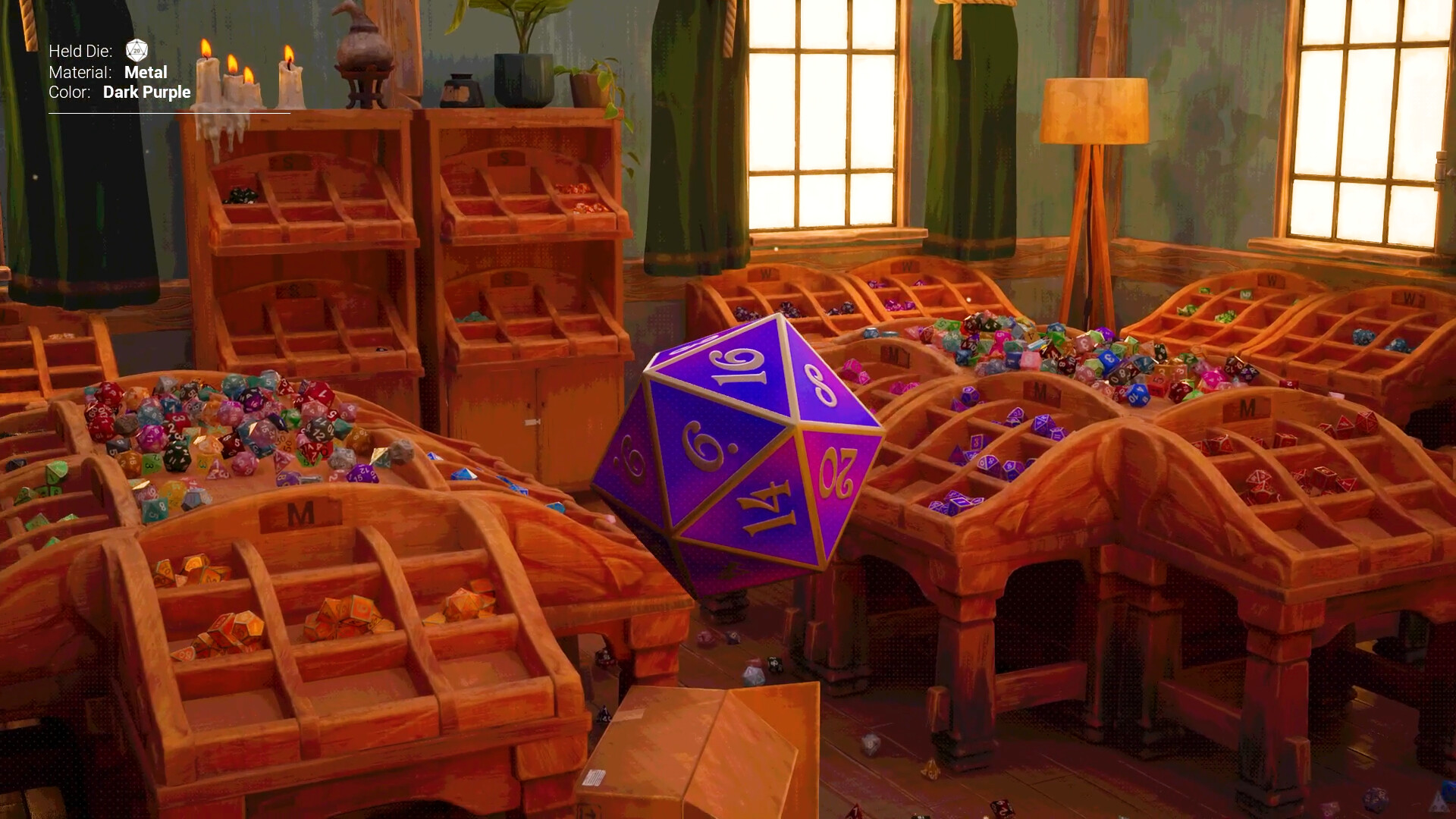
The set-completion achievements are the spine of the curve. Fifty completed sets sits at roughly thirty-eight percent, a hundred at fourteen, and two hundred at under three. That is a steep but ordinary shape for an organizing game: a large share of players do the first satisfying chunk and stop, a determined minority push into the long tail, and two hundred sets is the point where the game stops being a session and becomes a project.
Between those markers the game does not appear to add difficulty, only volume. Nothing in the data suggests a wall at fifty or a spike at a hundred — the percentages fall the way they would if the same loop simply continued. That is a design choice with a cost and a benefit: no frustration, but also no escalation, which is precisely why a game like this lives or dies on whether the loop stays pleasant for dozens of hours.
Almost nobody either finishes the tree or refuses it
The sharpest drop on the page belongs to the skill system. Learning all eight skills sat around two percent, and fully upgrading every skill around one in a thousand. Sorting the entire shop without any spell skills sits at the same order of magnitude. Put together, those three numbers describe a player base that takes the disks, uses them at base level, and never engages with the progression as a project — neither finishing it nor abstaining from it.
The two curiosity achievements bracket the range in a more interesting way. Crafting a first resin die was unlocked by roughly two players in five, so most people found the crafting system and used it. Eating every hidden edible die was unlocked by under one percent, so almost nobody hunted the shop for food. Same game, same day, same audience: one instruction the stock counter pushes you toward, one it does not. The gap between those two numbers is a map of what players will do without being asked.
What these numbers cannot tell you
They are a snapshot, not a description. They were read on 14 November 2026, about a day after the shop opened, and they will move — early percentages are dominated by the first buyers, who are not a representative sample, and they include everyone who launched the game for ten minutes and never came back. Rarity on day one measures attention, not difficulty, and a system that looks abandoned in this data may simply be one that a wider audience discovers next week.
The right way to use the curve is comparative rather than absolute. The ratio between learning eight skills and upgrading them all will hold roughly steady even as both numbers climb, and that ratio is the real statement about cost. Likewise the gap between crafting and eating dice is a statement about incentives that will survive the numbers changing. Read the shape, not the values, and re-read it in a month.
Where this comes from
Source · tier 1
“Roll for Initiative 100%, Gather Your Party 100%, Your First Cantrip 100%, Find Familiar 100%, Complete 50 sets 38.1%, Complete 100 sets 14.0%, Complete 200 sets 2.6%, Learn all eight skills 2.0%, Fully upgrade every skill 0.1%, Sort everything without spell skills 0.1%, Create your first resin die 37.9%, Eat all the hidden edible dice 0.6%.”
Source · tier 1
“achievements: total 16 — including Artificer’s Touch, Lawful Organised, Hungry Hoarder, No Magic, No Problem, and You are a natural!, which reads: Roll a natural 20 in a rolling tray.”
Source · tier 1
“The shop is running low on stock, so you will be able to craft custom resin dice to help fill the gaps.”
Checked 2026-11-14 against game version 1.0.