The disk tree: eight skills, and why almost nobody finishes it
The store page describes two floppy-disk powers. The launch build tracks eight, each with an upgrade path — and the numbers say almost nobody reaches the end of either half.
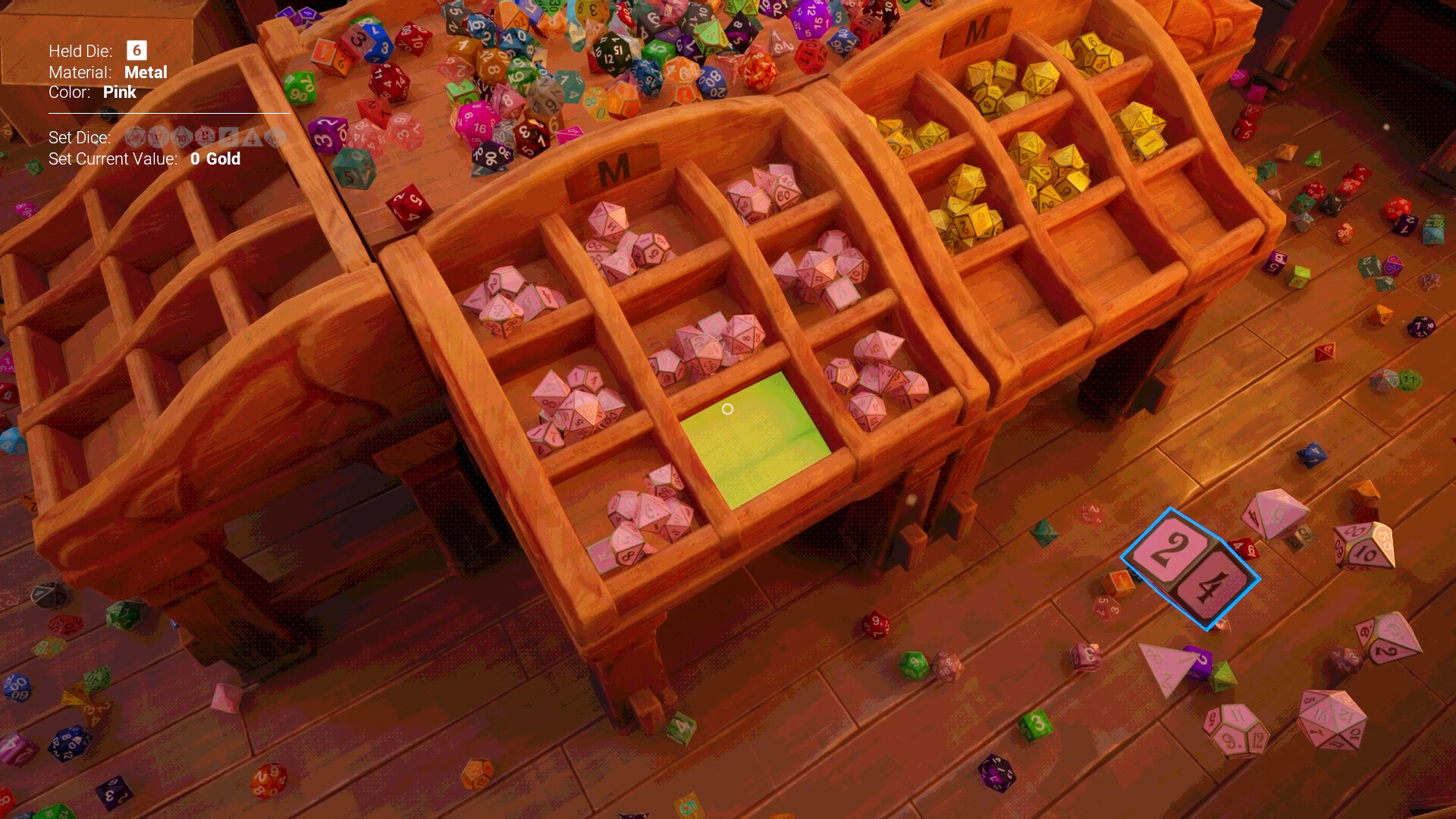
The store page for Dice Hoarder describes two floppy-disk powers, and both are real: one tracks down the dice still missing from a set, the other pulls a die directly into your hand as if by magic. If you stop reading there, you will expect a pair of unlocks that arrive mid-run and make the shop easier. The launch build is considerably larger than that.
Two documented powers, eight actual skills
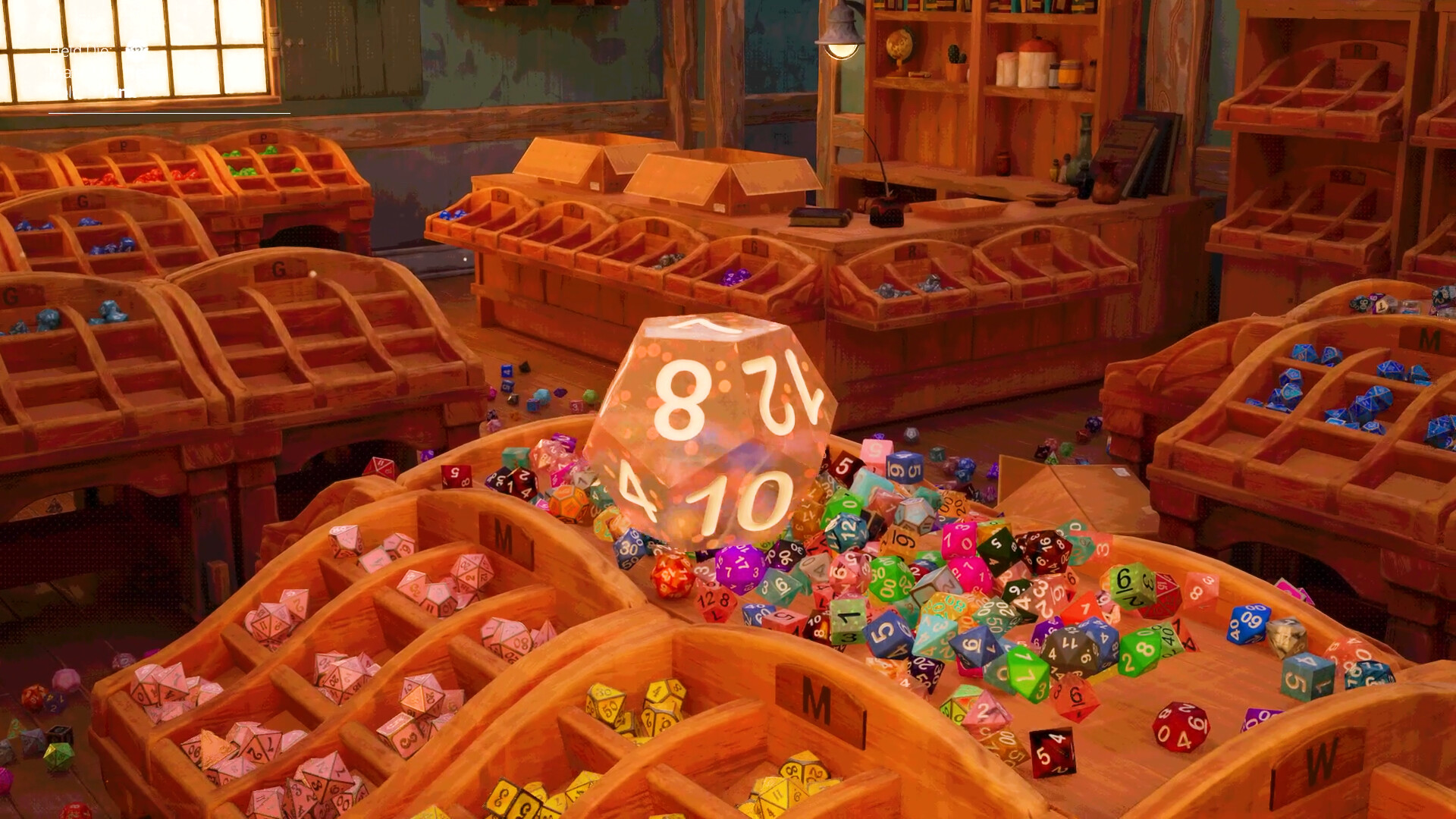
The achievement list settles the size of the system. One entry fires when you learn your first skill, a second fires when you have learned all eight, and a third fires when you have fully upgraded every one. Eight skills, each with an upgrade path, and the game distinguishes between learning and upgrading throughout. That is a progression tree, not a pair of conveniences, and it is the single biggest gap between the pre-launch description and the shipping game.
What the list does not say is what the other six skills are called or what they do. The two documented powers are named and described; the rest are only counted. This guide does not fill that gap, because a name invented here would be indistinguishable from a name observed, and the difference matters more than the page count.
Learning is a mid-game state; upgrading is an end-game one
Because the two events are tracked separately, the game itself is telling you they happen at different times. Learning eight skills is a reachable position within a run — you find disks, you spend them, the roster fills. Fully upgrading eight skills is a different order of commitment, and the numbers bear that out sharply: on launch day, learning all eight sat at roughly two percent of players, and fully upgrading every skill at about one in a thousand. A twenty-fold drop between the two halves of one system is the clearest statement available about relative cost.
The practical reading is an ordering. Early on, breadth beats depth: take every disk you find, learn the skills, get the roster wide, because that is the cheap half of the tree and the one the achievement structure rewards first. Upgrades are a long project, not a checklist for a single session, and treating them as the goal from the start will make the shop feel like a grind rather than a place to tidy.
The powers are convenience, not permission
The most useful entry on the whole list is the one that says you can sort everything in the shop without using any spell skills at all. That single line answers the question a new player actually has — do I need the disks to finish? — and the answer is no. Nothing is gated behind a power you have to find first. The disks exist to remove the two largest costs in the loop: locating the last piece of a set, and physically getting to it.
That makes the no-spell run a real test of the design rather than a handicap mode. With no tracking and no pull, you keep the matching rule and the identification panel — the panel is interface, not magic — and you lose the search shortcuts. Everything becomes eyes and walking. It is also the honest way to review a cozy organizing game, because a game in this genre lives or dies on whether the sorting is satisfying before the quality-of-life powers arrive. Almost nobody does it, which is itself informative: given the choice, players take the convenience every time.
The disks are still a mystery, and the achievements do not spoil it
What the disks are, who leaves them, and why some of them are described as looking suspicious are questions the game raises on purpose and does not answer in its marketing. The achievement list names skills but never explains the source of them, and the launch announcement closes by joking about the basement rather than addressing it. For a game built around a mundane job, the disks are the one piece of the loop that is not mundane, and the restraint is consistent.
So the accurate description of the system is unusually split. Mechanically it is well documented: eight skills, all upgradeable, optional in both directions, and unnecessary to finish the shop. Narratively it is almost entirely unstated. If you are deciding whether the progression is worth engaging with, the mechanical answer is that it saves you time and nothing more. If you are deciding whether it is interesting, nobody outside the game can tell you yet — and that is the point.
Where this comes from
Source · tier 1
“Your First Cantrip — Learn your first skill. Multiclass Madness — Learn all eight skills. Archmage — Fully upgrade every skill.”
Source · tier 1
“No Magic, No Problem — Sort everything without spell skills.”
Source · tier 1
“Learn all eight skills 2.0%, Fully upgrade every skill 0.1%, Sort everything without spell skills 0.1%.”
Source · tier 1
“Track down the remaining dice needed to complete a set, or pull them directly into your hand as if by magic.”
Source · tier 1
“As the days pass, mysterious floppy disks begin to appear.”
Checked 2026-11-14 against game version 1.0.